Introduction: Scaling Blog Traffic Beyond Basics
For WordPress site owners, affiliate marketers, SaaS founders, and agencies, growing organic traffic demands more than just publishing regularly or chasing broad keywords. To scale traffic strategically, you need tactical, data-driven approaches that leverage the full capabilities of WordPress and automation tools. This guide dives deep into advanced strategies that go beyond surface-level SEO, focusing on actionable techniques you can implement today.
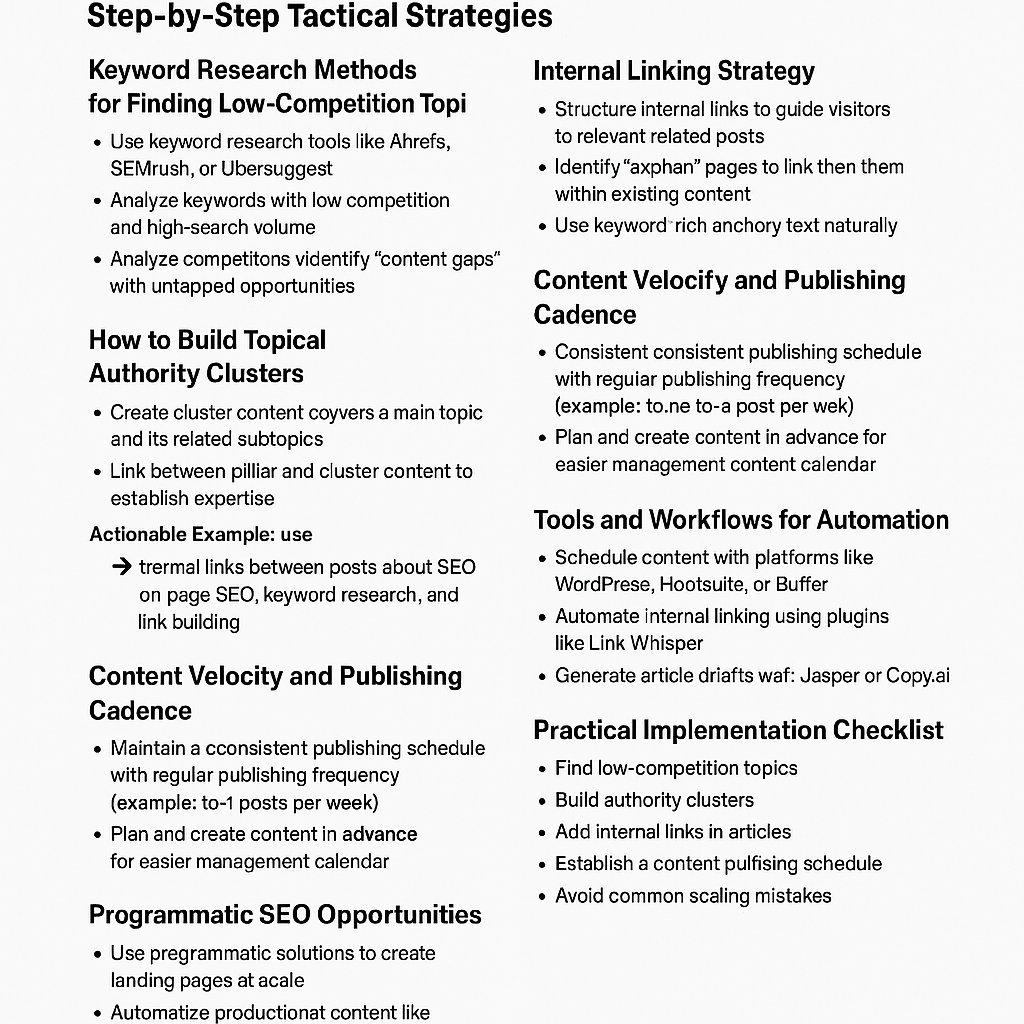
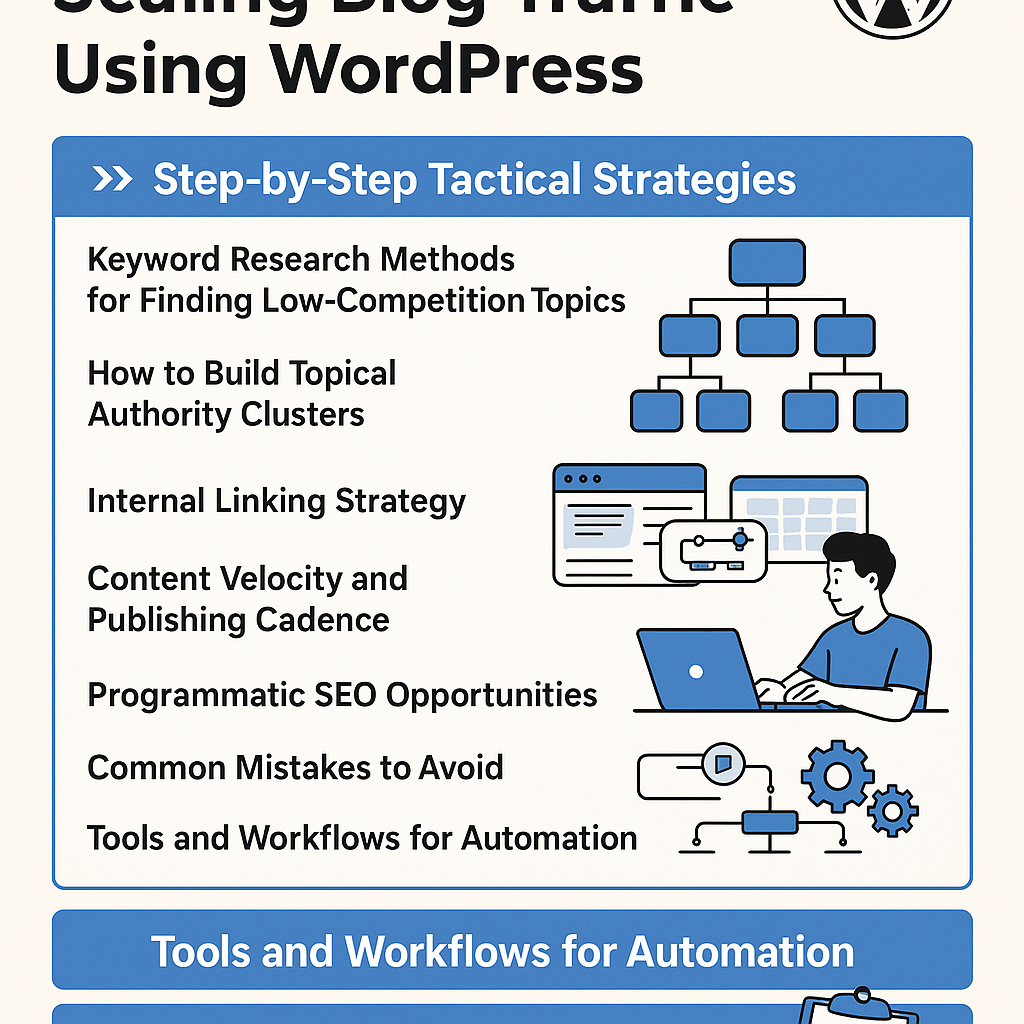
Step 1: Precision Keyword Research for Low-Competition Topics
Instead of targeting high-volume, highly competitive keywords, focus on identifying low-competition, high-intent search terms. Here’s a step-by-step approach:
- Use Advanced Filters in Keyword Tools: Tools like Ahrefs, SEMrush, or Ubersuggest allow filtering by Keyword Difficulty (KD). Set KD under 20 to find manageable keywords.
- Leverage Google’s “People Also Ask” and Related Searches: Extract niche subtopics from these sections to identify semantic variations and long-tail opportunities.
- Analyze Competitor Content Depth: Use tools like ContentGap (Ahrefs) to pinpoint keywords your competitors rank for but you don’t, prioritizing those with low difficulty.
- Validate Search Intent: Manually check top-ranking pages to ensure your keywords align with buyer or reader intent rather than informational fluff.
Example: Instead of targeting “WordPress SEO,” which is broad and competitive, drill down to “WordPress SEO for affiliate marketers 2026” or “best low-competition keywords for SaaS blogs.”
Step 2: Building Topical Authority Clusters on WordPress
Topical clusters revolve around a central pillar page and related subtopic posts, enhancing relevance and authority in Google’s eyes.
How to Structure Clusters
- Create a Pillar Page: Develop a comprehensive, authoritative guide on a core subject relevant to your niche.
- Write Supporting Cluster Content: Produce detailed posts targeting specific long-tail keywords related to the pillar topic.
- Link Clusters Internally: All cluster posts should link back to the pillar page and to each other where relevant, reinforcing semantic relationships.
Example: For a SaaS blog, a pillar page might be “Ultimate Guide to SaaS Marketing in 2026,” with clusters like “SaaS SEO tactics,” “Content marketing for SaaS founders,” and “Affiliate marketing for SaaS products.”
Step 3: Tactical Internal Linking Strategy
Internal linking distributes page authority and guides both users and search engines through your site logically.
Best Practices
- Use Descriptive Anchor Text: Avoid generic “click here” links; use keyword-rich text that reflects the target page content.
- Link Deep: Don’t only link to homepage or top-tier pages; ensure deep content gets internal links to improve indexation.
- Audit and Update Regularly: Use tools like Screaming Frog or Link Whisper plugin to identify orphan pages or broken links.
- Limit Links Per Page: Keep the number of internal links reasonable (typically under 100) to maintain crawl efficiency.
Step 4: Optimizing Content Velocity and Publishing Cadence
Content velocity—the frequency of publishing new content—directly impacts SEO momentum but must be balanced with quality.
Actionable Guidelines
- Establish a Consistent Schedule: For example, publish 2-3 posts weekly to maintain audience engagement and signal freshness.
- Batch Content Creation: Use editorial calendars and batch writing to streamline workflow and avoid gaps.
- Prioritize Content Updates: Refresh top-performing posts monthly or quarterly to sustain rankings and relevance.
Note: Increasing publishing cadence without maintaining content quality can dilute authority and traffic.
Step 5: Unlocking Programmatic SEO Opportunities on WordPress
Programmatic SEO automates the creation of large-scale, data-driven content pages targeting long-tail keywords.
How to Implement
- Identify Scalable Content Types: Examples include location-based pages, product comparison tables, or industry-specific lists.
- Leverage Custom Post Types and Taxonomies: Use WordPress features or plugins like Toolset or Pods to structure data.
- Automate Content Generation: Use CSV imports, REST API integrations, or custom scripts to populate templates with dynamic data.
- Ensure Unique and Valuable Content: Avoid thin content by enriching programmatic pages with user reviews, FAQs, or expert insights.
Example: A SaaS affiliate site creating unique pages for “Best CRM software in [City]” by combining location data with CRM features dynamically.
Step 6: Common Pitfalls to Avoid
- Keyword Stuffing: Overusing keywords can trigger penalties and reduce readability.
- Ignoring User Experience: Over-automation without quality control leads to spammy content and high bounce rates.
- Neglecting Mobile Optimization: Google prioritizes mobile-first indexing; slow or unresponsive sites lose rankings.
- Failing to Track Metrics: Without monitoring organic traffic and keyword rankings, you can’t optimize effectively.
Step 7: Recommended Tools and Automation Workflows
Automation maximizes efficiency but requires smart tool selection and workflows.
Tools
- Keyword Research: Ahrefs, SEMrush, Ubersuggest with API access for bulk data.
- Content Planning: Trello or Airtable integrated with editorial calendar plugins like Edit Flow.
- Internal Linking: Link Whisper plugin automates internal link suggestions and audits.
- Programmatic Content: WP All Import for bulk uploads, Toolset for custom post types, and custom PHP scripts.
- Analytics: Google Analytics + Google Search Console + Rank Tracker tools.
Workflow Example
- Run automated keyword gap analysis monthly via API.
- Feed selected keywords into Airtable editorial calendar.
- Batch write content or use AI-assisted drafting tools with human editing.
- Publish and automatically trigger internal linking suggestions via Link Whisper.
- Set reminders for content update cycles and traffic performance reviews.
Implementation Checklist
- Conduct monthly low-competition keyword research with KD < 20 filtering.
- Create and maintain topical authority clusters with pillar and cluster pages.
- Implement descriptive internal linking across all new and existing posts.
- Publish 2-3 high-quality posts weekly; batch produce content to maintain cadence.
- Develop programmatic SEO pages using custom post types and automated data imports.
- Regularly audit site for keyword stuffing, UX issues, and mobile performance.
- Use automation tools to streamline keyword research, content planning, internal linking, and analytics.
- Continuously monitor traffic metrics and adjust strategies based on data.
By applying these advanced, tactical strategies, you position your WordPress blog to scale organic traffic sustainably and efficiently—achieving growth through precision, structure, and smart automation.
![Understanding AI Website Builders: How They Work and Who Should Use Them [2026-05-29 11:58:17 1bv161]](https://getwpai.com/wp-content/uploads/2026/05/getwpai-20260529-115817.png)
![Mastering AI-Powered Content Automation in WordPress: A Strategic Guide for Scalable Growth [2026-05-25 11:43:01 rdw72k]](https://getwpai.com/wp-content/uploads/2026/05/getwpai-20260525-114301.png)