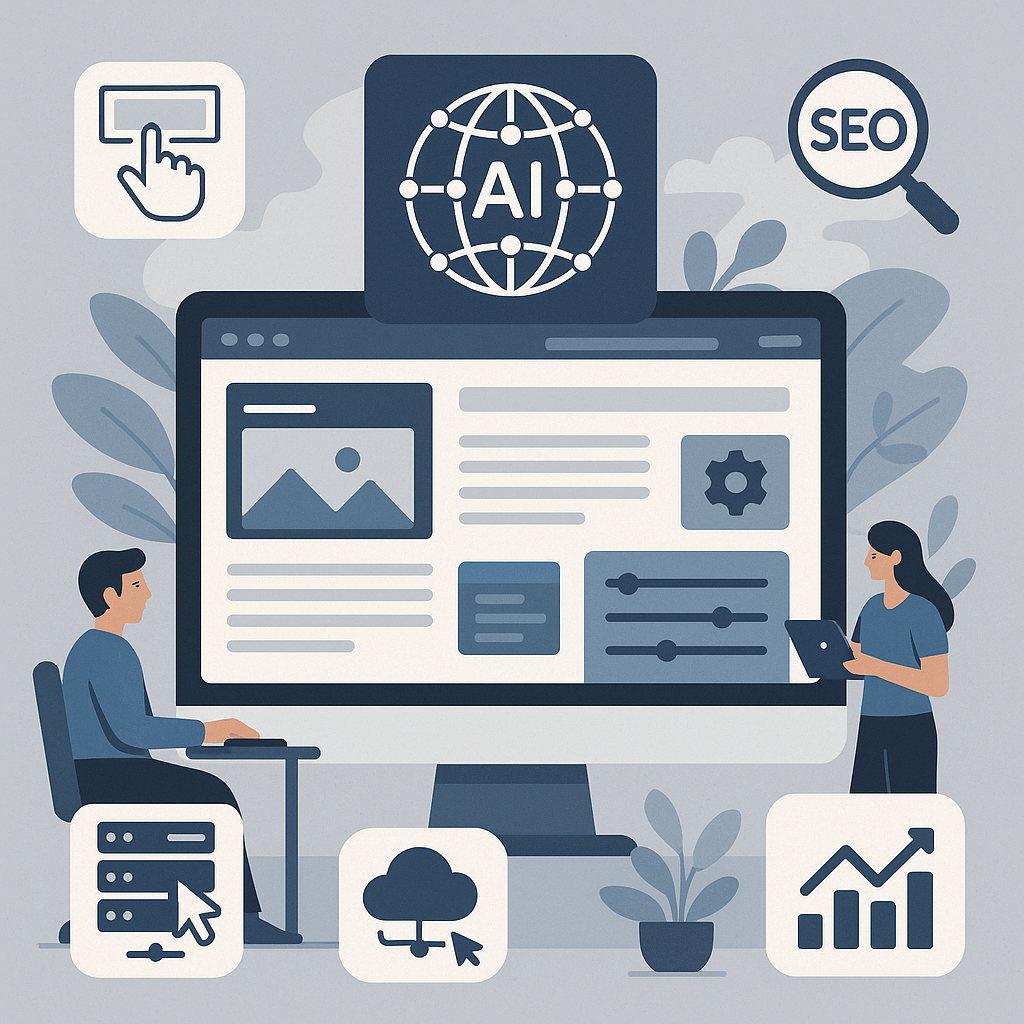
Introduction: The Rise of AI Website Builders
Building a website used to require technical skills, design expertise, and significant time investment. Today, AI website builders are changing this landscape by leveraging artificial intelligence to simplify and accelerate the website creation process. These platforms are gaining traction among entrepreneurs, small business owners, and creators who want a professional online presence without the complexity or cost of traditional web development.
But what exactly are AI website builders, and how do they work? This article takes a detailed look at the technology behind these tools, their features, advantages, limitations, and practical advice on who should consider using them.
What Is an AI Website Builder?
An AI website builder is a platform that uses artificial intelligence to automate the creation of websites. Unlike traditional website builders that rely heavily on manual design and setup, AI website builders analyze user input and preferences to generate customized website designs, layouts, and content automatically.
Core to these platforms is automation across multiple aspects:
- Design and Layout: AI algorithms generate visually appealing templates tailored to the user’s industry, brand style, and content needs.
- Content Generation: Some builders use AI to draft copy, headlines, and even suggest images or videos relevant to the website’s purpose.
- SEO Setup: AI tools often optimize site structure, metadata, and keywords to improve search engine visibility right from the start.
By integrating these functions, AI website builders reduce the traditional barriers to website creation, making it accessible for those without design or coding experience.
How AI Website Builders Work
The process of creating a website with an AI builder typically unfolds in several distinct steps:
User Input and Preferences
At the outset, users provide basic information such as their business type, preferred style, color schemes, functional requirements, and sometimes example websites they admire. This input forms the foundational data the AI uses to tailor the website.
AI-Driven Design Generation
Using the provided information, the AI engine selects or generates a layout and visual design that aligns with the user’s brand and industry. It arranges page elements like headers, menus, images, and text blocks in a way that balances aesthetics and usability.
Content Creation
Depending on the platform, AI can draft initial website copy, including headlines, service descriptions, and calls to action. This content is typically editable so users can personalize it further.
Customization and Editing
While AI sets up the initial framework, users retain the ability to customize the website. This may include adjusting layouts, changing colors, adding new pages, or modifying text to better suit their vision.
Publishing and Ongoing Management
Once satisfied, users can publish their site directly through the platform, which often includes hosting services. Some platforms continue to offer AI assistance for ongoing SEO improvements, content updates, or performance monitoring.
Key Features to Look For
Drag-and-Drop Editing
Even with AI assistance, intuitive drag-and-drop editors allow users to fine-tune their website’s design without coding. This feature offers flexibility beyond the AI’s initial suggestions.
AI Content Generation
Look for platforms that can generate high-quality, relevant text and suggest media that complement the site’s purpose, saving time on content creation.
SEO Tools
Effective AI builders provide SEO optimization features such as automatic metadata setup, keyword recommendations, and site speed enhancements to improve search rankings.
Integrations
Seamless integration with third-party tools—like email marketing services, payment gateways, social media, and analytics platforms—is essential for expanding website functionality.
Hosting Services
Many AI website builders offer integrated hosting, simplifying the launch process while handling security and uptime responsibilities.
Analytics and Performance Tracking
Built-in analytics tools help users monitor visitor behavior, traffic sources, and conversion metrics, enabling data-driven improvements.
Benefits and Limitations
Benefits
- Speed: AI drastically reduces website development time, often enabling users to launch in hours instead of weeks.
- Cost Savings: Automating design and content generation lowers expenses compared to hiring designers or developers.
- Ease of Use: Minimal technical knowledge is needed, making web presence accessible to non-experts.
Limitations
- Customization Constraints: While AI provides a solid foundation, complex customizations may be limited or require manual adjustments.
- Dependence on AI-Generated Structure: The AI’s choices might not always align perfectly with user preferences, leading to generic or less unique designs.
- Content Quality Variability: AI-generated text may need careful editing to ensure accuracy, tone, and brand voice.
Who Should Use an AI Website Builder?
AI website builders are particularly suited for:
- Entrepreneurs and Startups: Those needing a quick, affordable way to establish an online presence.
- Small Businesses: Owners seeking a professional website without the resources to hire developers or agencies.
- Bloggers and Creators: Individuals wanting to share content with minimal setup and technical hassle.
- Non-Technical Users: Anyone uncomfortable with coding or design tools who still wants control over their website.
However, organizations requiring highly bespoke or large-scale websites might find AI website builders less suitable due to customization limits.
Practical Checklist: Choosing the Right AI Website Builder
- Does the platform align with your website goals and industry?
- Is the AI-generated design customizable enough to match your brand identity?
- Does it offer quality AI content creation that saves time but allows edits?
- Are SEO tools included to help improve your search visibility?
- Can you integrate essential third-party services you rely on?
- Is hosting provided, and does it meet your site’s reliability and security needs?
- Are analytics features available to track and optimize performance?
- Is the pricing transparent and appropriate for your budget?
- How responsive and helpful is customer support?
Taking the time to evaluate these factors will help ensure the AI website builder you choose fits your unique requirements and helps you create a website that truly supports your goals.
![Understanding AI Website Builders: How They Work and Who Should Use Them [2026-05-29 11:58:17 1bv161]](https://getwpai.com/wp-content/uploads/2026/05/getwpai-20260529-115817.png)
![Mastering AI-Powered Content Automation in WordPress: A Strategic Guide for Scalable Growth [2026-05-25 11:43:01 rdw72k]](https://getwpai.com/wp-content/uploads/2026/05/getwpai-20260525-114301.png)