Introduction: What Are AI Website Builders and Why Are They Growing in Popularity?
Creating a website has traditionally required a mix of technical skills, design knowledge, and time. AI website builders are reshaping this landscape by leveraging artificial intelligence to simplify and speed up the process. These tools use machine learning and automation to generate website designs, craft content, and optimize for search engines, reducing the need for manual input from users.
As more entrepreneurs, small business owners, and creators seek efficient ways to establish an online presence without extensive technical expertise, AI website builders are gaining traction. They promise faster setup, cost-effective solutions, and user-friendly interfaces that make website creation accessible to a broader audience.
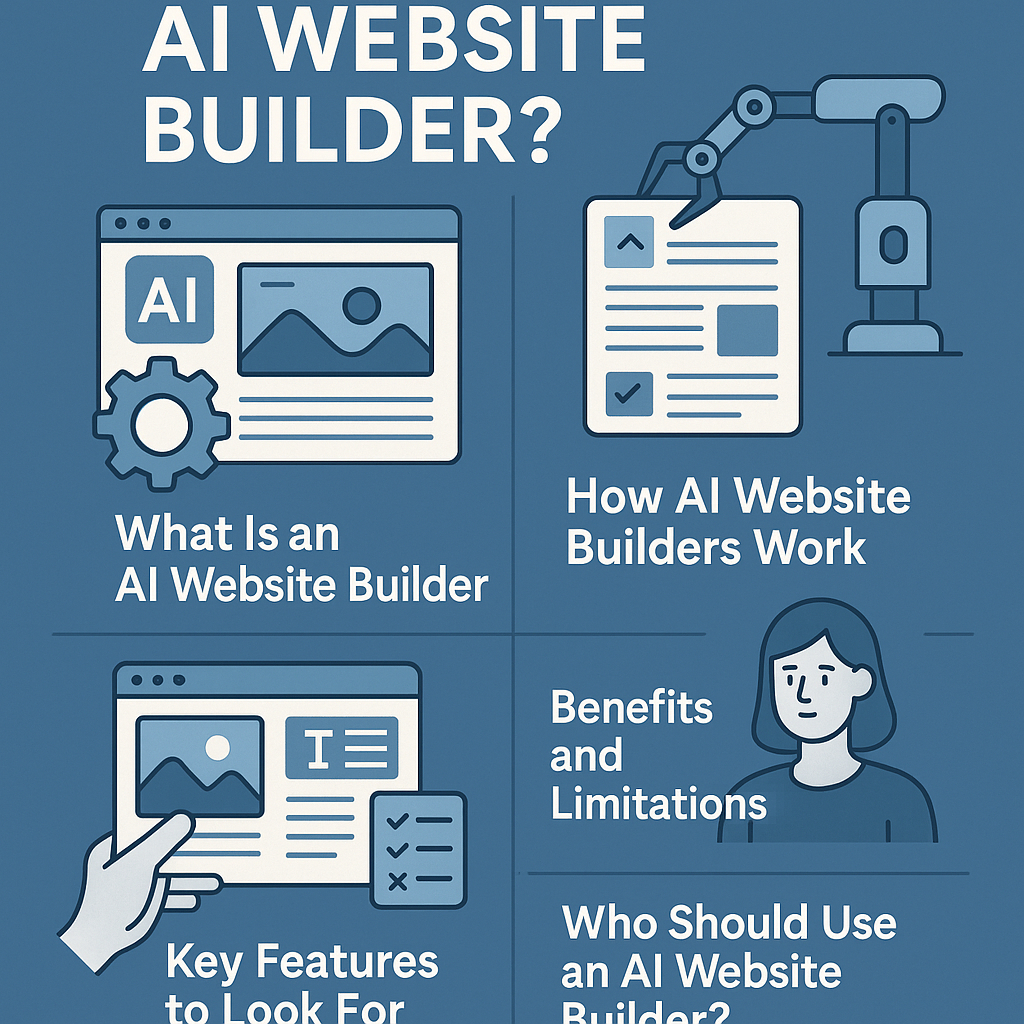
What Is an AI Website Builder?
An AI website builder is a platform that employs artificial intelligence technologies to automate various aspects of website creation. Unlike traditional website builders that require users to manually choose templates, layouts, write content, and handle SEO settings, AI builders streamline these steps by making intelligent suggestions and generating elements automatically.
The core concept revolves around:
- Automated Design: AI analyzes user preferences and industry standards to create visually appealing layouts and color schemes.
- Layout Generation: It arranges website components such as headers, images, and text sections logically and attractively without manual drag-and-drop.
- Content Creation: Based on user inputs or business descriptions, AI generates relevant text, including headlines, paragraphs, and calls to action.
- SEO Setup: The AI configures meta tags, keywords, and other optimization essentials to improve search engine visibility.
How AI Website Builders Work
The process of building a website with AI is typically broken down into several stages:
User Input and Initial Data Collection
The user provides foundational information about their business, purpose, style preferences, and any specific content to include. This input might be in the form of answers to questions, uploading branding assets, or selecting industry categories.
AI-Driven Design Generation
Using the input, the AI engine generates multiple design options tailored to the user’s requirements. These designs include color palettes, font choices, and layout arrangements that align with the brand identity and usability best practices.
Content Creation and Integration
The AI then produces website copy, such as homepage introductions, service descriptions, and blog post drafts. This content is integrated seamlessly into the design, ensuring coherence in tone and style.
Customization and User Refinement
Users can personalize the AI-generated website through intuitive editing tools. While the AI provides a structured foundation, users retain control to adjust elements, add media, or modify text to better fit their vision.
Publishing and Ongoing Optimization
Once satisfied, users publish their site directly from the platform. Many AI builders also offer continuous optimization features, adjusting SEO settings or updating content recommendations based on analytics and trends.
Key Features to Look For
Drag-and-Drop Editing
Even with AI automation, having the ability to manually fine-tune your website with drag-and-drop tools is important. This feature offers flexibility to reposition elements, customize layouts, and add new sections without requiring coding skills.
AI Content Generation
Look for platforms that provide AI-powered writing assistance to generate or enhance website copy, blog posts, and product descriptions. Effective content generation should offer relevance, clarity, and customization options.
SEO Tools
Integrated SEO features that automatically optimize meta descriptions, keywords, and site structure help improve search engine rankings. Some builders also provide actionable SEO insights and suggestions for further improvement.
Integrations
Consider whether the AI website builder supports connections with third-party services such as email marketing platforms, social media channels, payment gateways, and analytics tools to streamline business operations.
Hosting
Many AI builders include hosting services, simplifying the process by bundling website creation and deployment. Check for reliability, speed, security features, and scalability of the hosting environment.
Analytics
Built-in analytics help monitor visitor behavior, traffic sources, and conversion metrics. These insights guide ongoing refinement and marketing strategies.
Benefits and Limitations
Benefits
- Speed: AI builders drastically reduce the time from concept to live website.
- Cost Savings: They often eliminate the need for hiring designers or developers.
- Ease of Use: Intuitive interfaces and automation lower the barrier to entry for non-technical users.
Limitations
- Customization Constraints: AI-generated templates and layouts may offer limited creative freedom for highly specific designs.
- AI Dependency: Users rely on AI’s interpretation, which may not always perfectly capture unique brand nuances or complex requirements.
- Content Quality Variation: While AI can draft content quickly, human editing is often needed to ensure tone, accuracy, and engagement.
Who Should Use an AI Website Builder?
AI website builders are well-suited for:
- Entrepreneurs: Individuals launching startups who need a quick, professional online presence without significant upfront investment.
- Small Businesses: Companies looking to create or update websites efficiently while focusing resources on core operations.
- Bloggers and Creators: Content creators seeking to establish personal brands or portfolios with minimal technical hassle.
- Non-technical Users: Anyone without web design or coding experience wanting to maintain control over their site’s look and content.
Practical Checklist for Choosing an AI Website Builder
- Does it offer intuitive editing tools alongside AI automation?
- Are AI-generated content and SEO features robust and customizable?
- Does it support necessary integrations with your existing tools and platforms?
- Is hosting included, and does it meet your performance and security needs?
- Are analytics and ongoing optimization capabilities available?
- How flexible is the design customization to align with your brand identity?
- What support and resources does the platform provide for troubleshooting or learning?
By carefully evaluating these factors, entrepreneurs and creators can select an AI website builder that balances automation with control, enabling them to build effective websites tailored to their unique needs.
![Understanding AI Website Builders: How They Work and Who Should Use Them [2026-05-29 11:58:17 1bv161]](https://getwpai.com/wp-content/uploads/2026/05/getwpai-20260529-115817.png)
![Mastering AI-Powered Content Automation in WordPress: A Strategic Guide for Scalable Growth [2026-05-25 11:43:01 rdw72k]](https://getwpai.com/wp-content/uploads/2026/05/getwpai-20260525-114301.png)