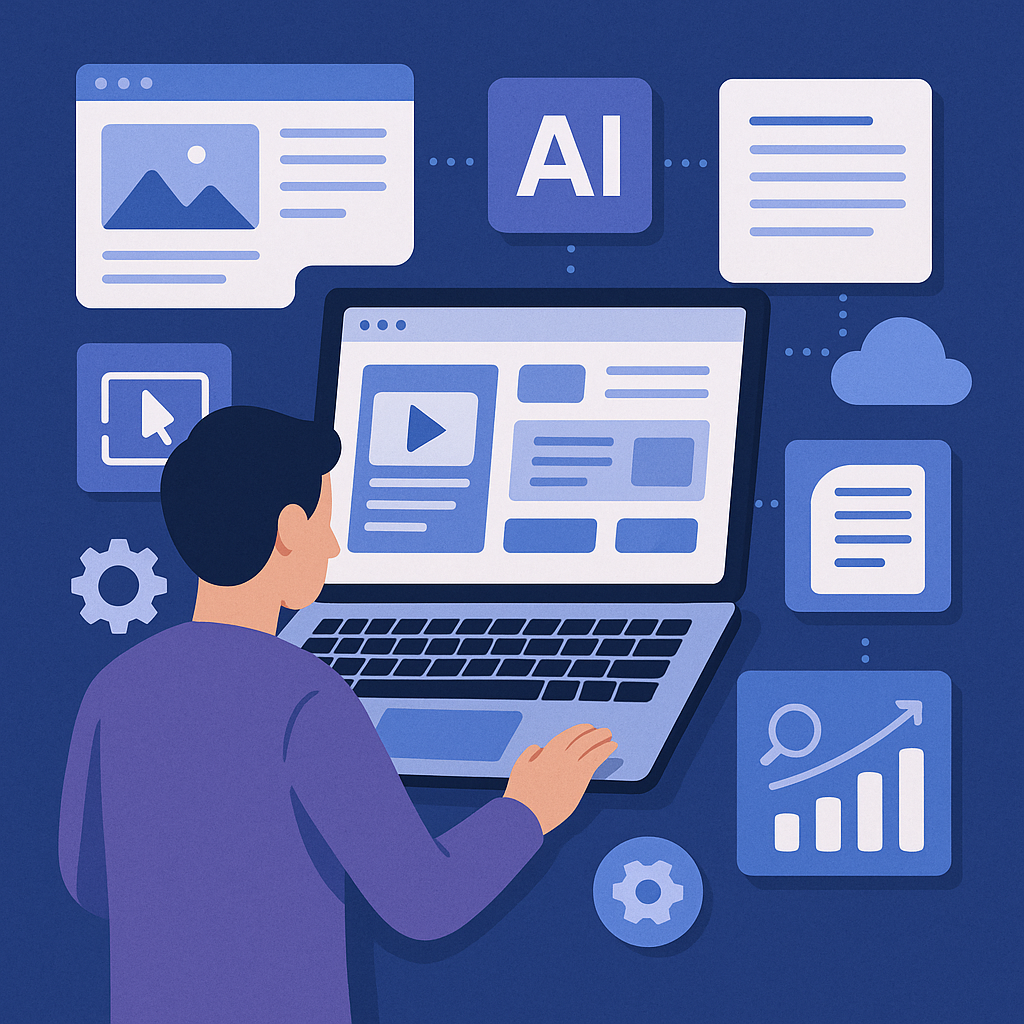
Introduction: What Are AI Website Builders and Why Are They Gaining Popularity?
Building a website traditionally required technical skills, time, and often a significant financial investment. Artificial Intelligence (AI) website builders have emerged as an innovative solution that simplifies this process by automating many aspects of website creation. These platforms use AI algorithms to design layouts, generate content, and optimize for search engines, enabling users with limited technical knowledge to launch functional and attractive websites quickly. Their growing popularity stems from the desire for speed, affordability, and ease of use in a competitive digital landscape.
What Is an AI Website Builder?
An AI website builder is a platform that leverages artificial intelligence to automate the creation and setup of websites. Unlike traditional website builders that rely heavily on manual input, AI website builders analyze user preferences, business information, and content needs to generate a customized website design and structure. The core elements automated by these tools typically include:
- Design and Layout Automation: Using AI, the platform selects appropriate themes, color schemes, and page structures based on user input or industry standards.
- Content Generation: Some AI builders create written content such as product descriptions, about pages, or blog posts to populate the site.
- SEO Setup: They automatically configure metadata, keywords, and site architecture to improve search engine visibility.
By handling these foundational tasks, AI website builders reduce the complexity and time involved in launching a professional online presence.
How AI Website Builders Work
The process behind AI website builders involves several key steps, combining user interaction with machine intelligence:
1. User Input and Preferences
The journey begins when the user provides basic information such as the website’s purpose, industry, target audience, and any specific branding elements like logos or color preferences. This input guides the AI’s decisions.
2. AI-Driven Design Generation
The AI analyzes the input and selects optimal page layouts, font pairings, and color palettes. It arranges content blocks and navigational elements to create a coherent and visually appealing site structure automatically.
3. Content Creation
For users who opt in, the AI can generate textual content using natural language processing, tailoring it to the website’s theme and intended tone. This may include homepage introductions, service descriptions, or blog post drafts.
4. Customization and Editing
Despite automation, users retain control to modify elements manually. Most platforms offer drag-and-drop interfaces, allowing users to adjust layouts, replace images, or rewrite content as needed.
5. Publishing and Optimization
Once finalized, the AI website builder handles hosting setup and deploys the website online. It may continue optimizing SEO elements over time based on performance data.
Key Features to Look For in an AI Website Builder
Drag-and-Drop Editing
A user-friendly drag-and-drop editor is essential to easily customize AI-generated designs without coding knowledge, allowing users to reposition elements, add new sections, or tweak styles.
AI Content Generation
Look for tools that offer AI-generated text tailored to your niche, reducing the burden of writing and helping maintain a consistent voice across the site.
SEO Tools
Integrated SEO features like automatic meta tag creation, keyword suggestions, and sitemap generation can improve your site’s search engine ranking without manual intervention.
Integrations
Compatibility with third-party services such as email marketing platforms, payment gateways, or social media is important for expanding your website’s functionality.
Hosting
Some AI website builders include hosting services, simplifying deployment and maintenance by providing secure, reliable infrastructure.
Analytics
Built-in analytics dashboards enable you to monitor traffic, user behavior, and conversion metrics to assess the site’s effectiveness and guide improvements.
Benefits and Limitations
Benefits
- Speed: AI builders drastically reduce the time from concept to launch, often producing complete websites within minutes.
- Cost-Effectiveness: They eliminate the need for hiring professional designers or developers, lowering upfront expenses.
- Ease of Use: Intuitive interfaces and automation make website creation accessible to users without technical skills.
Limitations
- Customization Constraints: While flexible, AI-generated designs may not fully capture unique brand identities or niche-specific needs.
- Dependency on AI Logic: Overreliance on AI can produce generic layouts and content that lack originality or nuance.
- Content Quality Variability: Automatically generated text might require significant editing to meet quality and accuracy standards.
Who Should Use an AI Website Builder?
AI website builders are particularly suitable for:
- Entrepreneurs and Startups: Those needing a quick, affordable online presence to test ideas or promote early-stage businesses.
- Small Business Owners: Owners without dedicated IT or marketing teams who want to create or update websites independently.
- Bloggers and Creators: Individuals seeking an easy way to establish a personal brand or portfolio with minimal technical overhead.
- Non-Technical Users: Anyone intimidated by traditional web design or coding who values simplicity and speed.
Practical Checklist for Choosing an AI Website Builder
- Does the platform offer intuitive design customization tools? Ensure you can easily adjust AI-generated layouts.
- Is AI content generation included, and can you edit generated text? Check for flexibility in content creation.
- Are SEO features integrated to boost your site’s visibility? Look for automatic optimization options.
- Does it support necessary third-party integrations? Verify compatibility with your marketing and sales tools.
- Is hosting reliable and included, or will you need separate services? Consider total cost and convenience.
- Are analytics available to track your website’s performance? Data-driven insights are critical for growth.
- What level of customer support and documentation is provided? Assistance can be vital during setup and beyond.
By evaluating AI website builders against these criteria, you can select a platform that aligns with your goals, technical comfort level, and budget, making website creation a manageable and rewarding endeavor.
![Understanding AI Website Builders: How They Work and Who Should Use Them [2026-05-29 11:58:17 1bv161]](https://getwpai.com/wp-content/uploads/2026/05/getwpai-20260529-115817.png)
![Mastering AI-Powered Content Automation in WordPress: A Strategic Guide for Scalable Growth [2026-05-25 11:43:01 rdw72k]](https://getwpai.com/wp-content/uploads/2026/05/getwpai-20260525-114301.png)