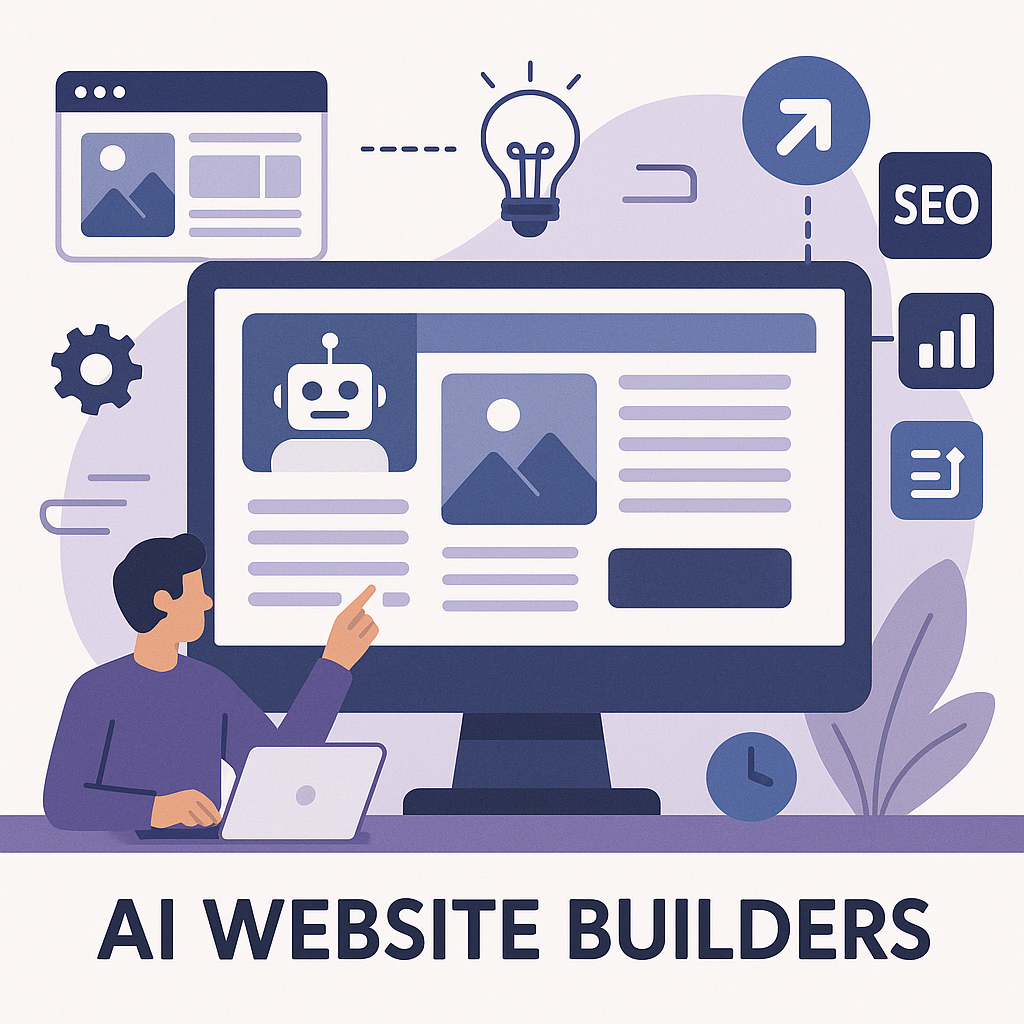
Introduction: Understanding AI Website Builders and Their Rising Popularity
In the evolving landscape of web development, AI website builders have emerged as a notable innovation. These platforms leverage artificial intelligence technologies to simplify and accelerate the process of creating websites. Increasingly favored by entrepreneurs, small business owners, and creators, AI website builders promise a blend of automation, customization, and efficiency that traditional web design methods often lack. This article aims to provide a clear, practical overview of what AI website builders are, how they function, their core features, and their suitability for different types of users.
What Is an AI Website Builder?
An AI website builder is a digital tool that uses artificial intelligence to automate several aspects of website creation. Unlike manual web design, which requires extensive coding and graphic design skills, AI website builders streamline the process by generating design layouts, content, and even SEO parameters based on user input and learned data patterns.
At its core, these platforms combine automation in three key areas:
- Design and Layout Automation: AI algorithms suggest or automatically create visually appealing page structures tailored to the user’s industry or style preferences.
- Content Generation: Using natural language processing, the AI crafts text for pages such as home, about, and services, sometimes even generating images or multimedia elements.
- SEO Setup: AI tools analyze keywords and metadata to optimize the site for search engines, helping improve visibility without manual SEO expertise.
How AI Website Builders Work
The process of building a website with AI can be broken down into several stages, each harnessing computational intelligence to reduce manual effort:
User Input and Preferences
Users begin by providing foundational information such as the website’s purpose, industry category, target audience, and stylistic preferences. This input helps the AI understand the context and goals.
AI-Driven Design Generation
Based on the input, the AI generates a tailored website design. This includes selecting color schemes, font pairings, layout structures, and even placeholder images or icons that suit the intended brand identity.
Content Creation
The system then produces draft content for essential website sections. This content can range from headlines and descriptions to blog posts or product information. Some platforms allow users to further refine or expand this content.
Customization and User Editing
While the AI provides a comprehensive starting point, users can typically adjust elements through drag-and-drop interfaces or simple editing tools. This step ensures the final site aligns closely with individual preferences.
Publishing and Optimization
Once satisfied, users can publish the website directly from the platform. Many AI builders also handle backend optimizations such as SEO metadata, mobile responsiveness, and speed enhancements automatically.
Key Features to Look For
Drag-and-Drop Editing
Even with AI-generated templates, flexible editing tools are essential. Drag-and-drop editors enable intuitive, code-free modifications, allowing users to reposition elements, add new sections, or tweak designs easily.
AI Content Generation
Look for platforms that offer robust AI writing assistance, capable of creating coherent, relevant, and customizable content. The ability to generate images or multimedia assets aligned with the text is an added advantage.
SEO Tools
Effective AI website builders incorporate SEO features such as keyword suggestions, automatic metadata creation, sitemap generation, and analytics integration to boost search engine performance.
Integrations
Compatibility with third-party services like payment gateways, email marketing platforms, social media, and customer relationship management (CRM) systems expands the website’s functionality and business potential.
Hosting
Many AI website builders offer integrated hosting, simplifying the launch process. It’s important to evaluate the hosting quality, uptime guarantees, and scalability options.
Analytics
Insightful analytics dashboards help users monitor site traffic, user behavior, and conversion metrics, enabling data-driven improvements over time.
Benefits and Limitations
Benefits
- Speed: AI dramatically reduces the time required to launch a professional-looking website.
- Cost Savings: By minimizing the need for specialized designers or developers, AI builders lower upfront investment.
- Ease of Use: Designed for non-technical users, these platforms democratize website creation.
Limitations
- Customization Constraints: While AI generates solid baseline designs, it may not support highly specific or complex customization needs.
- Dependence on AI Patterns: Websites built with AI can sometimes appear generic or similar due to reliance on common templates and data patterns.
- Content Accuracy: AI-generated text may require editorial oversight to ensure accuracy and appropriate tone.
Who Should Use an AI Website Builder?
AI website builders are particularly well-suited for:
- Entrepreneurs and Startups: Those needing a quick, affordable web presence to validate ideas or launch products.
- Small Businesses: Companies without dedicated web teams that seek functional, professional sites with minimal hassle.
- Bloggers and Creators: Individuals looking to focus on content creation rather than technical setup.
- Non-technical Users: Anyone lacking coding or design expertise who still wants control over website appearance and content.
However, organizations requiring highly customized solutions, advanced integrations, or unique design aesthetics might find AI builders limiting.
Practical Checklist for Choosing an AI Website Builder
- User Interface: Is the platform intuitive and easy to navigate?
- Design Flexibility: Can you customize layouts, colors, and fonts beyond AI defaults?
- Content Quality: Does the AI generate relevant, well-written text that requires minimal editing?
- SEO Features: Are SEO tools comprehensive and user-friendly?
- Integration Options: Does it support key third-party tools your business needs?
- Hosting and Performance: Are uptime and load speeds reliable?
- Analytics Availability: Can you track visitor data and site performance easily?
- Support and Resources: Is customer support accessible, and are tutorials or help guides thorough?
By carefully evaluating these factors, you can select an AI website builder that aligns well with your goals and technical comfort level, ensuring an efficient and satisfying website creation experience.
![Understanding AI Website Builders: How They Work and Who Should Use Them [2026-05-29 11:58:17 1bv161]](https://getwpai.com/wp-content/uploads/2026/05/getwpai-20260529-115817.png)
![Mastering AI-Powered Content Automation in WordPress: A Strategic Guide for Scalable Growth [2026-05-25 11:43:01 rdw72k]](https://getwpai.com/wp-content/uploads/2026/05/getwpai-20260525-114301.png)