Understanding AI Content Automation Within WordPress
AI content automation in WordPress integrates advanced natural language processing tools directly into your content management workflow. Instead of manually drafting every article, AI algorithms generate drafts, suggest topics, or even fully create posts based on predefined parameters. These tools analyze data trends, user intent, and SEO signals to produce relevant content aligned with your site’s goals.
Typically, integration happens via plugins or API connections to AI platforms. Once configured, they can execute tasks like keyword research, headline generation, and content drafting without constant human input. However, the key to success is treating AI as an augmentation tool that requires strategic supervision—not a replacement for editorial judgment.
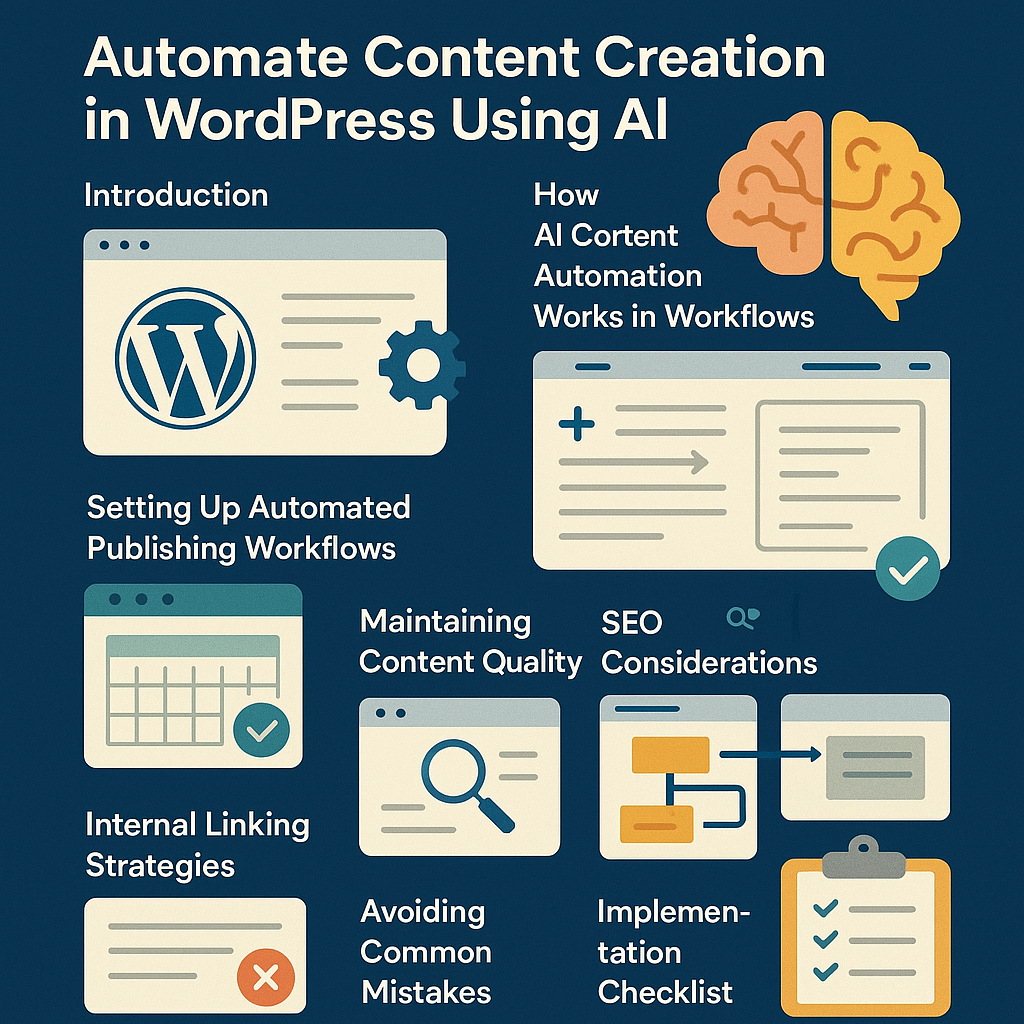
Step-by-Step Guide to Setting Up Automated Publishing Workflows
1. Choose the Right AI Plugin or Service
Identify AI tools compatible with WordPress such as Jasper, Writesonic, or custom GPT-based plugins. Consider factors like API limits, language capabilities, and plugin support.
2. Define Your Content Goals and Parameters
Outline your niche, target audience, and preferred content formats. Set clear instructions for the AI, including tone, length, and keyword focus.
3. Install and Configure the Plugin
Install your chosen AI plugin via the WordPress dashboard. Enter API keys and customize settings for content generation frequency, quality thresholds, and editorial workflows.
4. Create Content Templates and Topic Frameworks
Develop reusable post templates with placeholders for AI-generated text. Define topic categories and subtopics to guide AI content creation and ensure thematic consistency.
5. Automate Draft Creation and Review
Set the system to generate draft posts on a schedule. Use WordPress user roles to assign manual reviews before publishing, ensuring human oversight.
Scheduling and Rotating Topics for Balanced Content Coverage
To maintain audience engagement and SEO relevance, adopt a topic rotation strategy. Use editorial calendars integrated with AI tools to schedule diverse subjects across your niche.
- Monthly Themes: Assign broad themes per month to cluster related content.
- Content Pillars and Clusters: Rotate core pillars with supporting cluster articles to build topical authority.
- Automated Topic Suggestions: Leverage AI’s trend analysis to refresh your content calendar dynamically.
This approach prevents content fatigue and broadens keyword reach systematically.
Maintaining Content Quality and Avoiding Spammy Outputs
AI-generated content risks becoming repetitive or low-quality if left unchecked. Implement these best practices:
- Human Review: Always have editors review and refine AI drafts before publishing.
- Custom Prompts: Use detailed, specific prompts to guide the AI toward nuanced, insightful content.
- Plagiarism Checks: Run AI output through plagiarism scanners to ensure originality.
- Readability Analysis: Use tools like Yoast SEO or Grammarly to maintain clarity and flow.
Automated content should never replace strategic editorial input—it should serve as a foundation for faster, consistent publishing.
SEO Considerations When Automating Content
AI automation can supercharge your SEO efforts if implemented thoughtfully:
- Keyword Integration: Embed target keywords naturally within AI-generated drafts.
- Metadata Automation: Automate generation of meta titles, descriptions, and alt text with AI assistance.
- Schema Markup: Use plugins to automatically add structured data for better search visibility.
- Content Freshness: Schedule periodic AI-assisted updates to keep posts relevant.
However, avoid keyword stuffing or mass publishing thin content, as these can trigger search penalties.
Internal Linking and Content Clustering Strategies
Strategically interlink AI-generated content to enhance site architecture and user experience:
- Content Clusters: Group related posts around a central pillar page, linking cluster articles back to the pillar for topical authority.
- Automated Link Suggestions: Use AI plugins that recommend relevant internal links during content creation.
- Consistent Anchor Text: Standardize anchor text to reinforce keyword relevance.
These linking strategies improve crawlability and help distribute SEO value across your site.
Common Pitfalls and How to Avoid Search Engine Penalties
Automated content can backfire if not managed carefully. Watch out for:
- Duplicate Content: Ensure AI-generated posts are unique and not mere variations of each other.
- Over-Automation: Avoid setting AI to publish without any human checks.
- Thin Content: Prevent creating numerous low-value pages that offer little user benefit.
- Ignoring User Intent: Make sure AI content aligns with what your audience is actually searching for.
Regular audits and manual curation are essential to protect your site’s reputation and rankings.
Practical Use Cases for Different WordPress Site Owners
Bloggers
Use AI to draft regular posts on trending or evergreen topics, freeing time to focus on personalized storytelling and community engagement.
Affiliate Marketers
Automate product reviews, comparison posts, and updates to keep affiliate content fresh, while manually optimizing calls-to-action.
Digital Agencies
Leverage AI for client sites to rapidly produce content frameworks and initial drafts, accelerating campaign launches and testing.
SaaS Companies
Generate technical articles, FAQs, and onboarding guides systematically, ensuring consistency and breadth of documentation.
Implementation Checklist for AI Content Automation in WordPress
- ✔ Select an AI content generation plugin or API compatible with WordPress.
- ✔ Define clear content goals, topics, and editorial guidelines.
- ✔ Set up automated workflows with scheduled draft creation and editorial review steps.
- ✔ Develop a rotating topic calendar aligned with SEO and audience interests.
- ✔ Implement quality control measures: human editing, plagiarism checks, readability analysis.
- ✔ Optimize AI content for SEO: keywords, metadata, schema, and freshness.
- ✔ Establish internal linking structures focused on content clusters and pillar pages.
- ✔ Monitor for duplicate or thin content; adjust automation parameters accordingly.
- ✔ Conduct regular audits to ensure content aligns with user intent and search guidelines.
- ✔ Tailor automation strategies based on site type: blogging, affiliate marketing, agency, or SaaS.
Automating content creation in WordPress with AI is a powerful growth strategy when executed with discipline and strategic insight. It enables scalable publishing without sacrificing quality or SEO integrity—empowering site owners to meet evolving audience demands efficiently.
![Understanding AI Website Builders: How They Work and Who Should Use Them [2026-05-29 11:58:17 1bv161]](https://getwpai.com/wp-content/uploads/2026/05/getwpai-20260529-115817.png)