Introduction: What Are AI Website Builders and Why Are They Popular?
In recent years, the process of creating a website has become more accessible thanks to advances in artificial intelligence (AI). AI website builders leverage machine learning and automation to simplify web design, content creation, and optimization tasks. As a result, they have gained traction among entrepreneurs, small business owners, and creators who want to establish an online presence quickly without deep technical expertise.
Unlike traditional website builders that rely heavily on manual input, AI-powered solutions aim to reduce the complexity by anticipating user needs and automatically generating key website elements. This blend of automation and customization is reshaping how websites come to life.
What Is an AI Website Builder?
An AI website builder is a digital platform that uses artificial intelligence technologies to create websites with minimal user intervention. The core concept revolves around automating multiple aspects of website development, including design, layout, content generation, and search engine optimization (SEO) setup.
Traditional website creation often involves selecting templates, designing layouts, writing text, and configuring SEO settings manually. AI website builders streamline this by analyzing user input and preferences to generate tailored website elements automatically, thus accelerating the creation process.
Automation of Design and Layout
The AI engine evaluates the purpose of the site, the industry, and aesthetic preferences to select appropriate themes, colors, fonts, and page structures. This reduces the need for users to make detailed design decisions.
Content Generation
Some AI builders can generate written content based on brief prompts or keywords provided by the user, producing everything from homepage introductions to product descriptions.
SEO Configuration
AI tools can also optimize meta tags, headings, and other SEO components to improve a website’s visibility on search engines right from the start.
How AI Website Builders Work
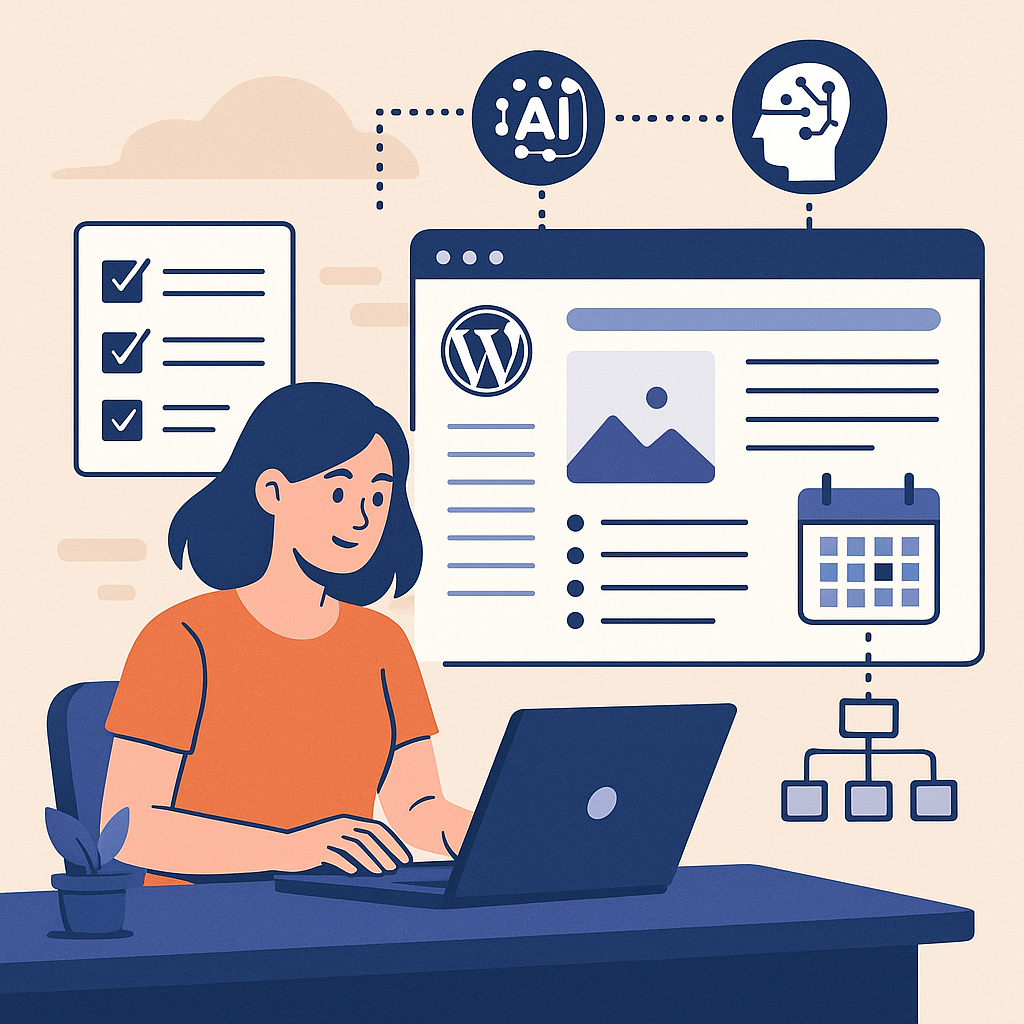
The operation of an AI website builder generally follows several key stages that combine user input with AI-driven automation:
1. User Input and Preferences
The process begins when the user provides basic information such as the website’s purpose (e.g., online store, portfolio, blog), preferred style, brand colors, or keywords relevant to the business.
2. AI-Driven Design Generation
Based on the input, the AI analyzes best practices, design principles, and industry trends to generate a customized website layout and visual style. This step often includes selecting templates and arranging elements in a visually appealing and functional way.
3. Automated Content Creation
Using natural language processing, the AI generates text content tailored to the site’s goals. This may include homepage copy, about sections, product descriptions, or blog post starters.
4. Customization and User Edits
After the AI completes the initial build, users can further personalize the website by adjusting layouts, editing text, adding images, or modifying colors through intuitive interfaces.
5. Publishing and SEO Setup
Once the site is finalized, the AI configures essential SEO elements such as meta descriptions and keywords, then publishes the site to a hosting environment, often included within the platform.
Key Features to Look For
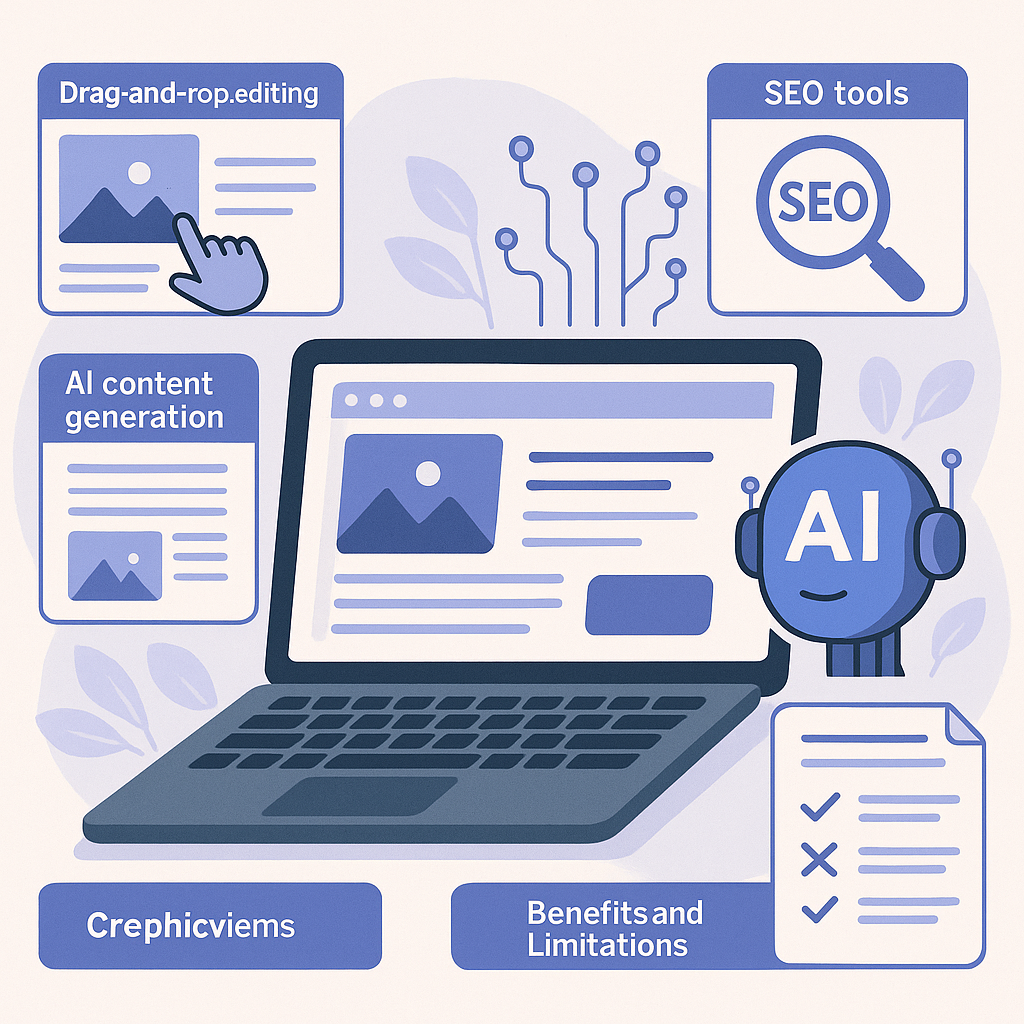
Drag-and-Drop Editing
Even with AI automation, the ability to manually adjust elements is important. A drag-and-drop editor lets users rearrange page components easily without coding knowledge.
AI Content Generation
Look for tools that offer natural, relevant, and customizable content creation capabilities to save time while maintaining quality.
SEO Tools
Built-in SEO assistance, such as automated meta tag creation and keyword suggestions, helps improve search engine rankings from the outset.
Integrations
Compatibility with third-party services like payment gateways, social media platforms, email marketing tools, and analytics software enhances website functionality.
Hosting
Many AI website builders include hosting, simplifying deployment. Check for reliable uptime, SSL certificates, and scalability options.
Analytics
Access to traffic statistics, user behavior data, and performance reports enables ongoing optimization and informed decision-making.
Benefits and Limitations
Benefits
- Speed: AI accelerates the website creation process, allowing users to launch sites in hours instead of weeks.
- Cost Savings: Automating design and content reduces the need for hiring designers or copywriters.
- Ease of Use: Minimal technical skills are required, making website creation accessible to non-experts.
Limitations
- Customization Constraints: While AI provides a good starting point, highly specific design needs or unique branding elements may be difficult to implement fully.
- Dependency on AI Structure: Overreliance on AI-generated templates can result in websites that look similar or lack distinctiveness.
- Content Accuracy: Automatically generated content might require careful review to ensure it aligns with the brand voice and factual correctness.
Who Should Use an AI Website Builder?
AI website builders are particularly well suited for:
- Entrepreneurs and Startups: Those needing a professional website quickly to establish an online presence without large upfront costs.
- Small Businesses: Companies with limited technical resources or budgets benefit from the simplicity and affordability.
- Bloggers and Creators: Individuals who want to focus on content creation rather than technical setup.
- Freelancers and Consultants: Professionals seeking an easy-to-manage portfolio or service site.
However, organizations requiring highly customized, enterprise-level websites might find AI builders less flexible compared to traditional development methods.
Practical Checklist for Choosing an AI Website Builder
- Does it allow easy customization beyond AI defaults?
- Are AI content generation capabilities relevant and reliable for your niche?
- Does it provide built-in SEO tools that meet your needs?
- Are integrations available for the services you use or plan to use?
- Is hosting included and does it offer good performance and security?
- Are analytics and reporting features accessible and actionable?
- Is the user interface intuitive and supportive for your skill level?
- What are the pricing structures and are they transparent?
Answering these questions will help determine if a particular AI website builder is a practical fit for your project.