Introduction: What Are AI Website Builders and Why They Matter
In recent years, creating a website has become more accessible thanks to advancements in technology. Among the latest developments are AI website builders—tools that leverage artificial intelligence to automate much of the website creation process. These platforms are growing in popularity because they promise to simplify design, content generation, and even SEO optimization, making website building faster and more approachable for non-experts.
What Is an AI Website Builder?
An AI website builder is a software tool that uses artificial intelligence algorithms to assist or fully automate the process of building a website. Unlike traditional website builders that rely heavily on manual input and design choices, AI website builders analyze user data and preferences to generate a tailored website layout, design, and content suggestions automatically.
Core components typically include:
- Design Automation: AI crafts the visual layout, color schemes, and typography based on user inputs or industry standards.
- Content Generation: Using natural language processing, the system can create text content such as headlines, product descriptions, and about pages.
- SEO Setup: The builder can automatically configure basic SEO settings like meta tags, keyword placement, and sitemap creation to improve search engine visibility.
How AI Website Builders Work
The process of building a website with AI can generally be broken down into several stages:
1. User Input
Users typically begin by providing basic information about their business or project. This may include the type of website (e.g., portfolio, e-commerce), preferred styles, brand colors, and content goals. Some platforms may also ask for existing logos or images.
2. AI Design Generation
Based on the input, the AI analyzes design trends, user preferences, and industry best practices to create an initial website layout. This includes arranging page sections, selecting fonts, and choosing color palettes that align with the brand identity.
3. Content Creation
The AI then generates written content tailored to the website’s purpose. For instance, it might draft an introductory paragraph, product descriptions, or blog post snippets. This step reduces the need for users to write all content manually.
4. Customization
While much is automated, users can usually customize various elements through drag-and-drop editors or simple controls. This allows for tweaking designs, adjusting text, and uploading media to better fit specific needs.
5. Publishing and Optimization
Finally, after review and adjustments, the website can be published directly through the platform, which often includes hosting services. The AI also ensures essential SEO configurations are in place to help the site perform well in search engines.
Key Features to Look For
Drag-and-Drop Editing
Even with AI automation, having a user-friendly drag-and-drop interface is valuable for manual adjustments. This feature enables users to modify layouts and content blocks without coding skills.
AI Content Generation
Look for builders capable of generating relevant and coherent text for various website sections, saving time while maintaining quality.
SEO Tools
Integrated SEO features such as keyword suggestions, meta tag customization, and automated sitemap creation help improve search rankings without needing expert knowledge.
Integrations
Support for third-party services like email marketing, payment gateways, and social media platforms extends the website’s functionality.
Hosting
Many AI website builders include hosting options, simplifying deployment. Verify uptime reliability and server speed to ensure consistent performance.
Analytics
Built-in analytics dashboards allow users to monitor visitor behavior, traffic sources, and site performance metrics to inform ongoing improvements.
Benefits and Limitations
Benefits
- Speed: Websites can be created in a fraction of the time compared to traditional methods.
- Cost Efficiency: Reduces the need for hiring designers or developers.
- Ease of Use: Designed for users without technical expertise.
Limitations
- Customization Limits: Automated designs may restrict creative freedom or unique branding.
- Dependence on AI: The quality of output depends heavily on the AI’s algorithms and training data, which may not perfectly align with all user needs.
- Potential Generic Feel: Some AI-generated sites can feel templated or similar to others if not sufficiently customized.
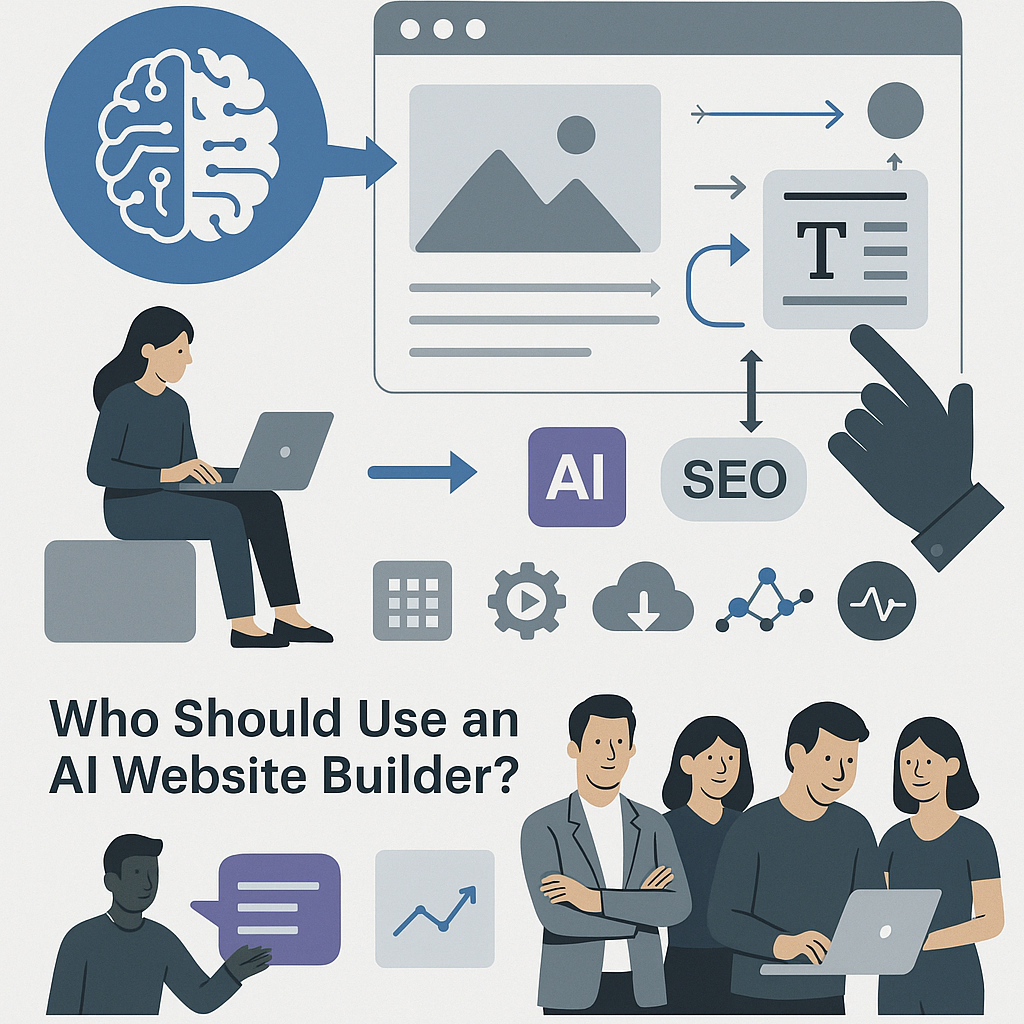
Who Should Use an AI Website Builder?
AI website builders are particularly well suited for:
- Entrepreneurs and Startups: Those needing a quick online presence without large upfront investment.
- Small Businesses: Owners who want to maintain control and save costs on web design.
- Bloggers and Creators: Individuals looking to launch personal or niche websites efficiently.
- Non-technical Users: Anyone without coding or design skills aiming for a professional-looking site.
Practical Checklist for Evaluating AI Website Builders
- How intuitive is the user interface for setup and editing?
- Does the AI generate content that matches your brand voice and style?
- Are SEO features comprehensive and easy to apply?
- What customization options are available post-AI generation?
- Does the platform offer reliable hosting with good performance?
- Are there integrations with tools you currently use or plan to use?
- Is there access to analytics to track your website’s effectiveness?
- What are the pricing plans and do they fit your budget?
Choosing the right AI website builder involves balancing automation convenience with the degree of control you need. By carefully assessing features and limitations, you can select a tool that aligns with your goals and capabilities.