Introduction: Beyond Basics — Scaling Blog Traffic with Precision
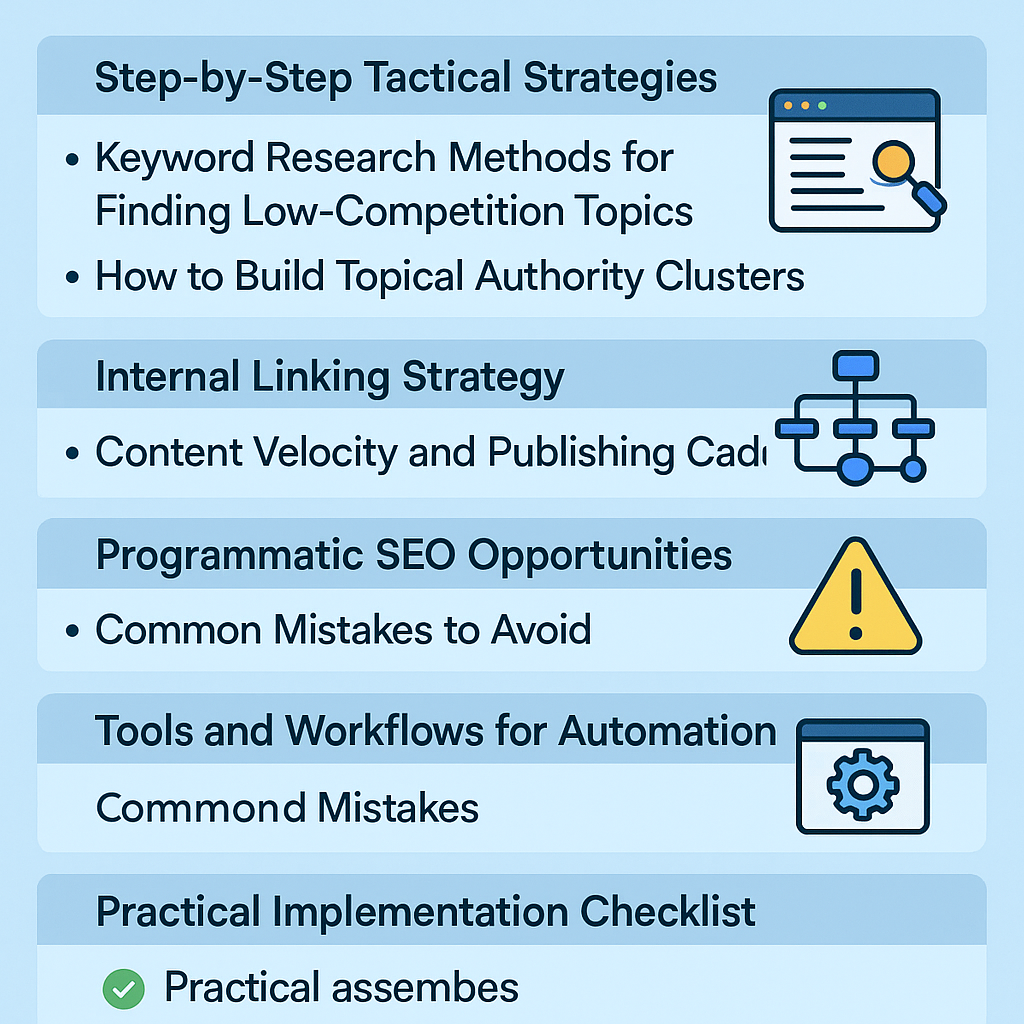
Growing your WordPress blog’s organic traffic is no longer about generic advice or sporadic content dumps. Serious site owners and marketers need a data-driven, tactical roadmap to scale efficiently. This guide dives deep into advanced, actionable strategies that move the needle — from pinpointing low-competition keywords to structuring topical clusters and harnessing automation. Let’s get into the step-by-step blueprint for sustainable traffic growth.
Step 1: Tactical Keyword Research for Low-Competition Opportunities
Generic keyword research tools often lead to overly competitive phrases. Instead, use a layered approach:
1. Leverage “Question-Based” Keywords
Use tools like AnswerThePublic and Google’s “People also ask” to uncover long-tail question queries with low SEO difficulty. For example, if your niche is SaaS marketing, search “how to reduce churn in SaaS startups” instead of broad terms like “SaaS marketing.”
2. Validate with Keyword Difficulty Metrics
Use Ahrefs or SEMrush to filter keywords with a difficulty score under 20. Cross-reference with search volume (minimum 100/month) to find sweet spots that competitors overlook.
3. Geo & Niche Modifiers
Add location or niche-specific modifiers to broaden your keyword pool without increasing competition. Example: “WordPress SEO tips for affiliate marketers”.
Step 2: Building Topical Authority Clusters in WordPress
Google rewards sites that demonstrate comprehensive coverage of a subject. Create cluster content by:
1. Defining a Pillar Page
Start with a broad, highly comprehensive article acting as the topic hub (e.g., “Complete Guide to WordPress SEO”).
2. Writing Supporting Cluster Posts
Develop detailed subtopics that link back to the pillar page (e.g., “Optimizing WordPress Permalinks,” “Best SEO Plugins for WordPress”).
3. Structuring with Categories & Tags
Use WordPress categories for high-level organization and tags for granular topics, ensuring each cluster is clearly segmented.
Step 3: Advanced Internal Linking Strategy
Internal linking spreads link equity and improves crawlability. Follow these tactics:
1. Contextual Links
Within your cluster posts, link key phrases naturally to the pillar page and other relevant cluster articles.
2. Use a Link Map
Create a spreadsheet mapping your pillar pages and corresponding cluster content to consistently track internal linking opportunities and avoid orphan pages.
3. Anchor Text Variation
Use diverse but relevant anchor texts to signal topical relevance and avoid over-optimization penalties.
Step 4: Optimizing Content Velocity and Publishing Cadence
Consistency and speed matter:
1. Set a Realistic Publishing Schedule
Start with 1-2 cluster posts per week to maintain quality. Gradually increase frequency as workflow automations streamline publishing.
2. Maintain Content Freshness
Regularly update pillar pages and high-traffic posts to keep rankings stable and improve CTR.
3. Batch Content Production
Use editorial calendars and batch writing/editing sessions to reduce context switching and improve throughput.
Step 5: Exploiting Programmatic SEO with WordPress
Programmatic SEO lets you create hundreds or thousands of pages targeting specific long-tail queries using templates and dynamic data.
1. Identify Scalable Content Themes
Example: For an affiliate site, programmatically generate pages comparing products with filters (e.g., “Best Budget Laptops under $500 in 2026”).
2. Use Custom Post Types and Advanced Custom Fields (ACF)
Create structured data entry forms in WordPress to feed template pages automatically.
3. Automate Data Import
Integrate APIs or CSV imports to bulk upload product or service data, reducing manual effort.
Step 6: Avoiding Common Growth Pitfalls
Beware the following mistakes:
- Content Bloat: Publishing low-value posts dilutes topical authority.
- Poor Link Structure: Orphaned or excessive internal links confuse search engines.
- Ignoring User Intent: Targeting keywords without matching content intent lowers engagement.
- Inconsistent Publishing: Irregular schedules reduce crawling frequency.
Step 7: Tools and Automation Workflows for Scalable Growth
Automation reduces overhead and improves consistency:
1. Keyword Research Automation
Use tools like Ahrefs API or SEMrush API integrated with Google Sheets to automate keyword discovery and filtering.
2. Content Planning
Leverage editorial plugins such as Edit Flow for WordPress to streamline collaboration and scheduling.
3. Content Generation & Optimization
Use AI-driven writing assistants for outlines and meta descriptions, but always apply human editing for quality.
4. Internal Linking Automation
Plugins like Link Whisper analyze and suggest internal links based on your content corpus.
5. Programmatic Page Creation
Combine WordPress Custom Post Types with automation tools like Zapier or Integromat to create pages from external data sources automatically.
Practical Implementation Checklist
- Conduct layered keyword research focusing on low-competition long-tail phrases.
- Create pillar pages and at least 3 supporting cluster posts per topic.
- Develop an internal link map and implement contextual linking with varied anchor text.
- Establish and maintain a consistent publishing cadence (minimum 1-2 posts per week).
- Set up custom post types and ACF for programmatic SEO content templates.
- Automate keyword tracking, content scheduling, and internal linking with dedicated tools.
- Regularly audit content for quality, relevance, and link structure.
- Continuously update pillar pages and high-performing posts.
- Avoid publishing low-quality or overly generic posts that dilute topical focus.
- Monitor traffic and rankings to adapt strategies dynamically.
By implementing these advanced, tactical strategies on your WordPress site, you’ll build a scalable, data-backed traffic growth engine that converts and sustains long-term authority.